

Can You Take a Power Bank on a Plane? What I Learned at Airport Security
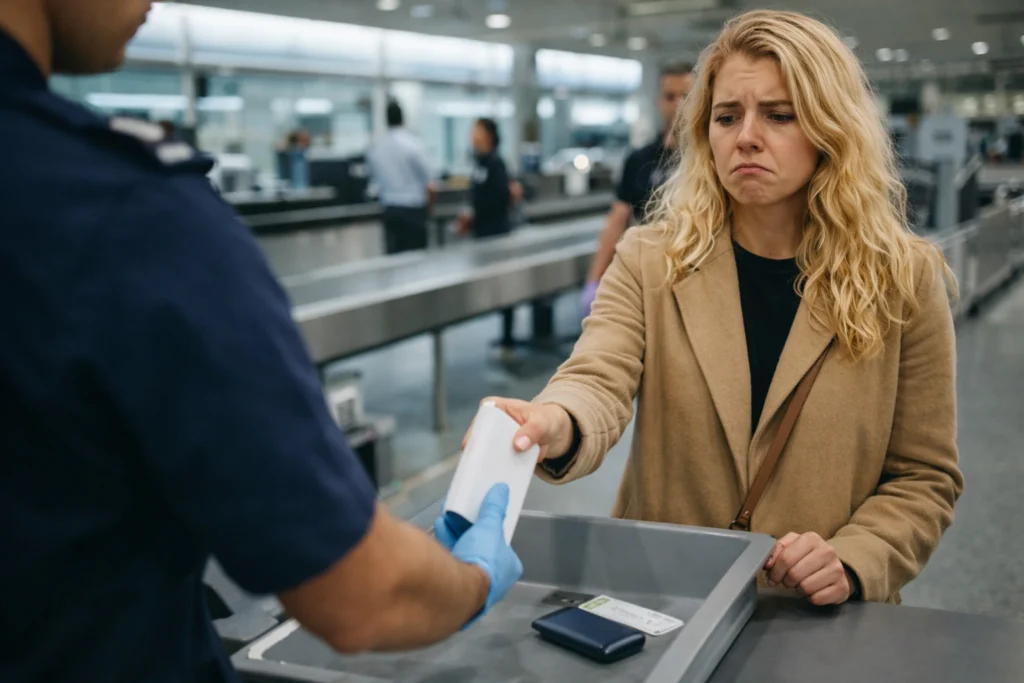
I found out about airline power bank rules in the most annoying way possible. Not while calmly reading a guide at home. Not while packing the night before. I found out while standing at airport security, watching my power bank get pulled aside for a closer look while I was already tired and already wishing I had checked this sooner.
The embarrassing part is that I thought I had made a sensible choice. I packed a bigger power bank for a holiday trip because I wanted fewer charging worries and less stress during a long travel day. What I did not think about enough was the difference between mAh and Wh. That turned out to be the whole problem.
So this page is the version I wish I had read before leaving home. It covers what size power bank usually makes sense for flights, why oversized models can become a hassle, what changed in 2026, and which Amazon UK options look a lot safer for normal travel.
I am also leaving space on this page for my own product photos. The airport photo helps show the story, but real shots of the actual power banks are just as useful. They make it easier to judge the size, the casing, the ports, and whether the battery details are clearly marked.
Some links on this page are affiliate links. See our Affiliate Disclosure. As an Amazon Associate we earn from qualifying purchases.
The Short Answer
If you only want the practical version, here it is. A power bank normally belongs in carry-on baggage, not checked luggage. And for most people, the easiest range is still up to 100 Wh. Once you move above that, things can get more awkward than they look on a shopping page.
- Carry-on baggage: yes
- Checked baggage: no
- Up to 100 Wh: usually the easiest range for normal travel
- 101–160 Wh: may need airline approval
- Over 160 Wh: not the kind of size most passengers should be relying on for flights
That is really the main thing I wish I had understood sooner. A power bank can look completely normal online and still be the wrong one to take to the airport.
Why This Got Stricter in 2026
This topic has become less relaxed in 2026, not more. Newer guidance has made it clear that passengers should not assume the old “just keep it in your cabin bag” advice covers everything. Some airlines are now stricter about how many power banks you can carry, whether you can charge them during the flight, and where they should be stored.
- Two power banks per passenger is becoming a more common limit
- Charging a power bank during the flight is no longer something I would count on
- Some airlines also do not want them stored in overhead bins
That does not mean every flight turns into a problem. It just means the safer move now is to buy a clearly labelled model, stay in the sensible size range, and check the airline’s own battery rules before you leave home.
What Happened to Me at Security
I was not doing anything reckless. I had not packed some ridiculous industrial battery pack. I had just made a very normal shopper mistake: I saw a bigger number and assumed that meant a better product. More battery. More convenience. Better value. End of story.
Except that is not how airport security looks at it. They do not care whether a product sounds handy on a shopping page. They care whether it fits the rules. Mine was no longer sitting comfortably in the easy, low-drama category, and that was the moment it finally clicked for me that a good power bank for everyday life is not always a good power bank for flying.
It was frustrating mostly because it was so avoidable. Five minutes of checking at home would have been a lot better than learning about it while standing over a security tray.
The Three Official Sources I Check First
When I check rules like this, I do not trust marketplace descriptions on their own. These are the sources I would look at first:
- UK Civil Aviation Authority for the practical UK passenger baggage and power-bank rules
- ICAO for the March 2026 restriction update
- Lufthansa Group for a clear airline-side example of the stricter 2026 approach
If you do not want to read all of that, the UK CAA guidance is the most relevant practical starting point for UK travellers. Power banks should stay in carry-on only, batteries up to 100 Wh are usually the simple option, and the 101–160 Wh range may need approval from the airline.
Why Bigger Was the Wrong Choice
A lot of shoppers look at mAh first. I did exactly the same thing. The problem is that airlines care much more about Wh, because that gives a clearer picture of the battery’s stored energy. So a power bank can look perfectly reasonable in a product listing and still be more awkward than it seems once flights are involved.
A good example is 30,000mAh. Using the common 3.7V cell rating that many consumer power banks are based on, that works out to roughly 111 Wh. A typical 20,000mAh model sits around 74 Wh. That second number is a lot easier to live with if you want an uncomplicated airport day.
That was the real lesson for me. For flights, bigger is not automatically better. A sensible size with clear labelling is usually the smarter buy.
How to Check a Power Bank Before You Fly
If the product page or the battery casing already shows the Wh rating, great. Use that. If it does not, the quick formula is:
Wh = mAh × V / 1000
For many standard power banks, the rough voltage check is 3.7V. That is usually enough to tell whether you are comfortably below 100 Wh or edging into the range where approval may become part of the story.
| Size | Approx. Wh | Travel Fit | My Take |
|---|---|---|---|
| 10,000mAh | 37 Wh | Usually safe and simple | Great for short trips and everyday phone use |
| 20,000mAh | 74 Wh | Usually safe and simple | The best balance for longer travel days |
| 27,000mAh | 99.9 Wh | Usually still under the line | Fine on paper, but close enough that I would still check the label carefully |
| 30,000mAh | 111 Wh | May need airline approval | The kind of size I would now avoid for easier travel |
For me, the sensible shopping range is now very obvious: 10,000mAh to 20,000mAh. That is where travel feels simpler and less risky.
If you want a more practical shortlist after the rules, see our guide to the best power banks for flights, where I narrow it down to the kinds of models that make the most sense for cabin travel.
Power Banks I Would Actually Buy for Flights
If I were shopping specifically for flights, these are the kinds of picks I would look at now. I am not trying to squeeze every possible milliamp out of the purchase. I want something easy to carry, clearly specified, and much less likely to create a stupid problem at security.
1) INIU 10,000mAh — the easy short-trip option
If I only needed a power bank for a weekend away, a day of maps, tickets, messages, and one or two top-ups, this is the size I would pick first. It does the job without feeling excessive.
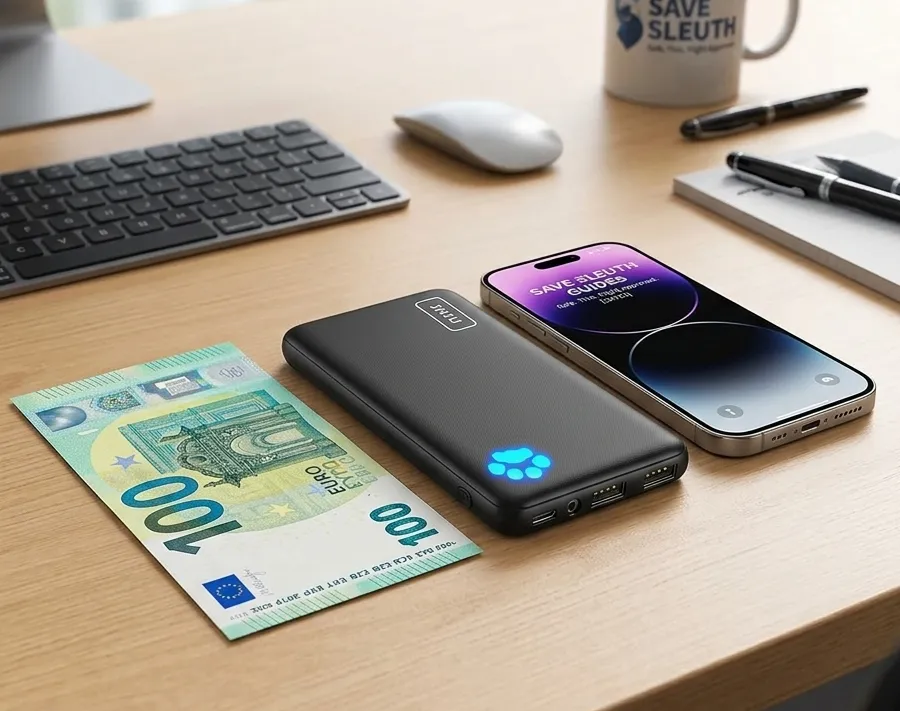
2) INIU 20,000mAh — the best all-round pick for flights
This is the size I would recommend to most people. It gives you more breathing room for delays, longer travel days, extra phone charges, and even more than one device, while still sitting in a much more comfortable range for flying.
If you want more detail on this one, I already covered it separately in my INIU Power Bank 20000mAh review.
3) Belkin 10,000mAh with integrated cable — neat for lighter packing
I also like compact power banks with an integrated cable for airport use. It means one less loose thing rolling around in the bag and a slightly cleaner setup for people who just want a small backup charger rather than a chunky battery brick.
What I Want to Show in My Own Photos
Promo pictures are useful for a clean product view, but they do not tell you much about how a power bank actually feels as a travel item. The photos I would add here are the practical ones people usually care about more.
- How large the device looks in hand
- Whether the label or capacity details are easy to find
- What the port layout looks like in real life
- How easily it fits into a small travel bag or jacket pocket
- How bulky it looks next to a phone, passport, or cable
My 60-Second Airport Checklist
If I were packing for the airport again tomorrow, this is what I would check:
- Make sure the power bank clearly shows Wh
- Keep it in carry-on baggage, never checked luggage
- Avoid damaged, swollen, or suspiciously cheap no-name batteries
- If your cabin bag might be gate-checked, keep the power bank easy to remove
- Do not assume you will be able to charge it during the flight
- Check your airline’s own battery rules before you leave home
Mistakes I Would Avoid Next Time
- Do not shop by mAh alone
- Do not assume the biggest battery is automatically the best travel buy
- Do not pack a power bank in checked baggage
- Do not travel with a damaged battery, even if it still seems to work
- Do not assume every airline handles power banks in exactly the same way
My Bottom Line
Yes, you can usually take a power bank on a plane. But the easy version of the answer is this: keep it in your carry-on and stay comfortably under 100 Wh. That is the bit I wish I had paid more attention to before my trip.
If I were buying again with flights in mind, I would stay in the 10,000mAh to 20,000mAh range and pick a model with clear specs. It is less awkward, less risky, and a lot more useful than standing at security with an oversized power bank you can no longer do anything about.
FAQ
Can you take a power bank on a plane?
Usually yes, but it should travel in your carry-on rather than checked baggage. For most travellers, the easiest range is a power bank that stays under 100 Wh.
Can I bring a 20,000mAh power bank on a plane?
In most cases, yes. A typical 20,000mAh model is usually well under 100 Wh, which is why it is one of the safest and most practical sizes for travel.
Is a 30,000mAh power bank allowed on a flight?
Not always in the easy, no-hassle sense. That size can fall into the range where airline approval may be needed, which is why I would not call it the best choice for normal flight use.
Can I put a power bank in checked luggage?
No. Power banks are generally treated as spare lithium batteries, so they should stay in carry-on baggage.
How do I check whether my power bank is under 100 Wh?
Look for the Wh rating first. If it is not shown, use the quick formula: mAh × V / 1000.
Can I charge my power bank during the flight?
I would not assume so. The 2026 guidance is stricter, and some airlines now clearly ban charging or using power banks on board.
What size power bank makes the most sense for flights?
For most people, 10,000mAh to 20,000mAh is the range that makes the most sense. It is practical, easier to justify, and far less likely to turn into an annoying airport problem.