
The Noonday Demon Review UK — Is It Worth Reading?
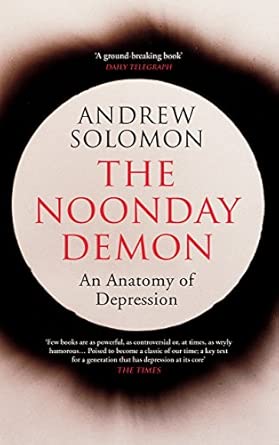
The Noonday Demon by Andrew Solomon is one of the most ambitious books in this whole mental health category. It is not a quick self-help read and it does not aim to be one. Instead, it combines personal experience, reporting, cultural analysis, and wider thinking about depression in a way that feels serious, detailed, and far-reaching. This review looks at what the book does well, where it feels weaker, and the kind of reader it is most likely to help.
Quick Verdict
The Noonday Demon works best as a major long-form book for readers who want depth, scope, and a wider understanding of depression. Its biggest strength is range. Andrew Solomon does not treat depression as one neat subject. He looks at it through personal life, history, treatment, society, identity, and culture, which makes the book feel much bigger than a standard mental health guide. The main limitation is obvious: it is long, heavy, and demanding. Readers wanting fast advice or a practical step-by-step method may find it too dense.
Key Facts at a Glance
- Author: Andrew Solomon
- Format reviewed: Amazon UK paperback edition
- Main topics: depression, treatment, culture, identity, grief, mental illness, society
- Book type: memoir / reporting / mental health nonfiction
- Best for: readers who want depth rather than quick fixes
What the Book Is About
This is not a standard depression self-help book. It is much broader and much more ambitious. Andrew Solomon starts from his own experience of depression, but the book expands far beyond memoir. It moves into interviews, history, medicine, society, family, identity, and the many ways depression shapes lives across different situations and cultures.
That gives the book unusual weight. It feels less like a guide and more like a full intellectual and personal map of depression.
What the Book Does Well
The clearest strength is scale. Very few books in this area manage to feel both personal and expansive at the same time. Solomon can describe inner suffering in a vivid way, but he also keeps pushing outward into larger questions about treatment, stigma, family, politics, and culture.
It is also unusually intelligent without becoming cold. The book has a lot of substance, but it does not feel emotionally empty. That balance is one of the reasons it still stands out.
Another major plus is that it treats depression seriously without flattening it into one simple explanation. Readers who are tired of oversimplified mental health books may find that especially valuable.
Where It Feels Weaker
The main weakness is length. This is a long and demanding book, and that alone will rule it out for some readers. Even when the material is strong, it is not always easy to move through quickly.
It is also not especially practical in the usual self-help sense. There is insight everywhere, but not much in the way of tidy techniques, exercises, or daily action steps. Readers looking for direct help may respect the book while still finding it too broad for their immediate needs.
Pros and Cons
✅ Pros
- Exceptionally broad and thoughtful view of depression
- Strong mix of memoir, reporting, and analysis
- Takes mental illness seriously without oversimplifying it
- Emotionally intelligent as well as intellectually rich
- Memorable for readers who want real depth
❌ Cons
- Very long and demanding
- Not a practical workbook or tool-based guide
- Can feel heavy if you want a lighter read
- Less suitable for readers looking for quick answers
Who Is It Best For?
✅ Buy it if:
- You want a serious, in-depth book on depression
- You like books that combine memoir with wider analysis
- You want more than basic self-help advice
- You are interested in the social and cultural side of mental illness
- You do not mind a long and demanding read
❌ Skip it if:
- You want a short and practical depression guide
- You are looking mainly for exercises or therapy tools
- You prefer lighter, faster, more accessible reads
- You are not in the mood for a heavy nonfiction book
Writing Style and Readability
The style is intelligent, reflective, and often powerful, but this is not an easy read in the casual sense. Solomon writes well, yet the subject matter and scale demand attention. Readers who enjoy long-form nonfiction may find that rewarding. Readers who want a fast, direct mental health book may find it too weighty.
In other words, this is a book to sit with rather than skim.
Is It Good for Depression?
Yes, especially for readers who want to understand depression deeply rather than just collect coping tips. The book is strongest as a wide, serious exploration of what depression can do to a person and how it intersects with identity, treatment, family, and society. It is less useful if your main goal is fast, practical help.
It is also worth being clear that a book like this should not be treated as a replacement for professional medical or mental health support.
Where to Buy in the UK
The Amazon UK paperback edition is available now, and other formats may appear depending on the listing and date.
📘 View The Noonday Demon on Amazon UK ↗
Related mental health book reviews
If you want to compare this deeper depression book with other mental health titles on Amazon UK, these reviews are good next steps.
- Lost Connections review — a wider, more argument-driven mental health book about depression, anxiety, loneliness, and modern life.
- Feeling Good review — a more structured CBT-based book focused on practical techniques for depression and negative thinking.
- Reasons to Stay Alive review — a more personal and memoir-led book about depression, panic, and recovery.
For a broader overview, visit our Amazon UK mental health books page.
Frequently Asked Questions
Is The Noonday Demon worth reading?
Yes, especially if you want a serious and wide-ranging book about depression rather than a quick self-help read. It is less suitable for readers who want short, practical advice.
What is The Noonday Demon about?
It is a major nonfiction book by Andrew Solomon that explores depression through personal experience, reporting, cultural analysis, and wider discussion of mental illness and treatment.
Is it a self-help book?
Not in the usual sense. It offers insight and perspective, but it is much closer to a deep nonfiction study than to a practical self-help manual.
Is it good for beginners?
Only if you are comfortable with a long and serious book. It is powerful, but not the easiest starting point for someone who wants a light introduction to mental health reading.
Who should skip this book?
Readers who want quick tools, a workbook format, or a lighter depression book may prefer something shorter and more immediately practical.
Some links on this page may be affiliate links. See our Affiliate Disclosure.