
The DOSE Effect Review UK — Is It Worth Reading?
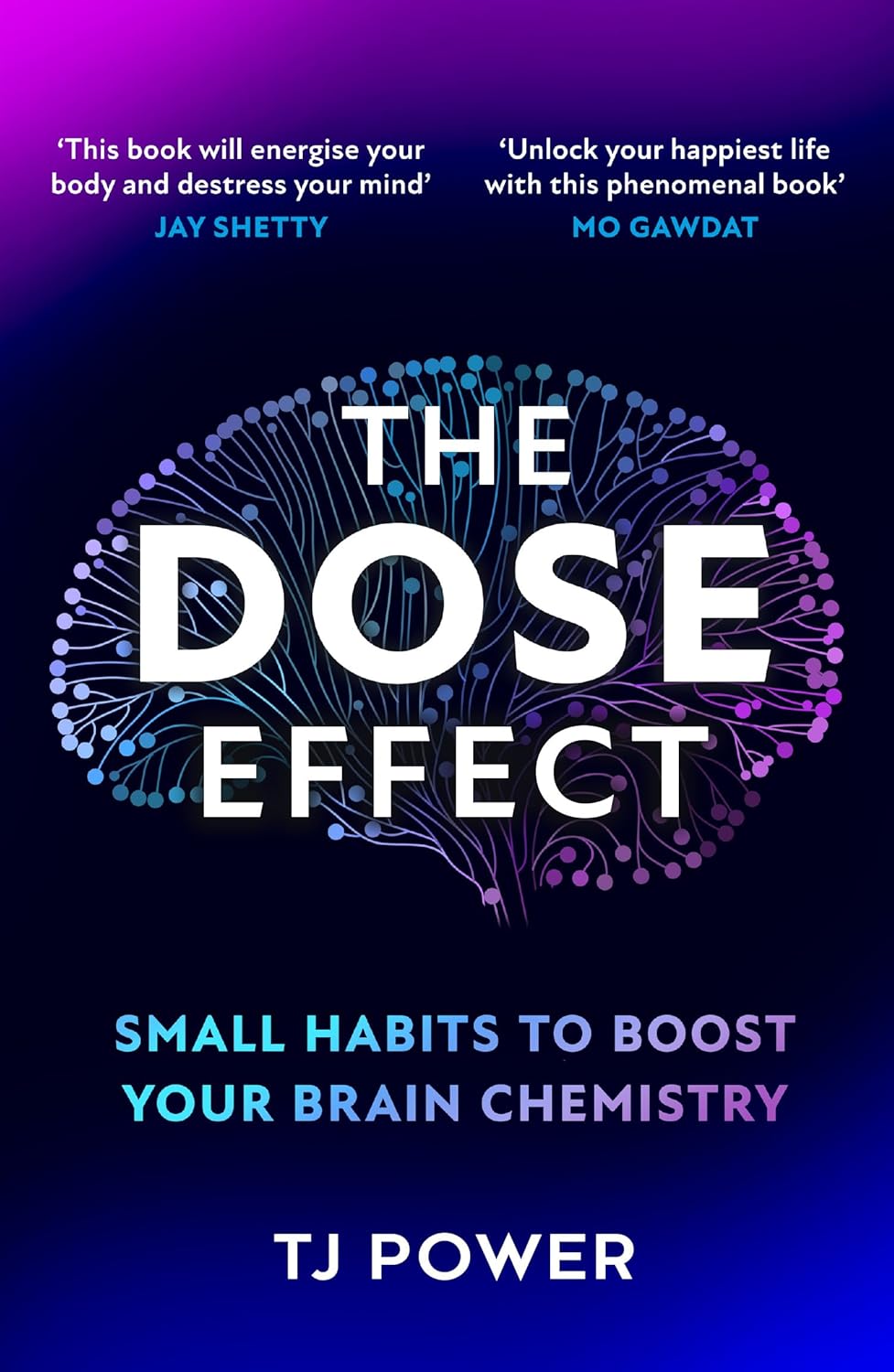
The DOSE Effect by TJ Power is one of the newer mental health and habit books getting attention on Amazon UK. It promises a practical framework built around dopamine, oxytocin, serotonin, and endorphins — but does it actually feel useful once you start reading? This review looks at what the book does well, where it feels weaker, and the kind of reader it suits best.
Quick Verdict
The DOSE Effect works best as an accessible, habit-led mental health book for readers who want simple ideas they can use quickly. Its strongest point is clarity. TJ Power explains the book’s core framework in a very readable way and keeps the advice tied to daily life rather than abstract theory. The main limitation is depth. Readers who want a denser or more clinical psychology book may find the framework broad and a little simplified.
Key Facts at a Glance
- Author: TJ Power
- Format reviewed: UK hardback edition
- Publisher: HQ / HarperCollins
- Publication date: 16 January 2025
- Length: 304 pages
- Main topics: dopamine, oxytocin, serotonin, endorphins, habits, mood, stress, energy, motivation
What the Book Is About
The book is built around a simple idea: a lot of what people experience as low motivation, stress, low mood, emotional disconnection, or mental fatigue can be viewed through four key chemicals and the habits that shape them. TJ Power uses DOSE as a practical framework for thinking about everyday life rather than as a narrow clinical treatment model.
Instead of presenting one heavy psychological system, the book tries to make brain chemistry feel more usable. The focus stays on routines, small behavioural shifts, and what readers can do in ordinary daily life to improve energy, mood, connection, and resilience.
What the Book Does Well
The biggest strength here is accessibility. The DOSE framework is easy to remember, and the book is written in a direct, modern way that makes the ideas feel less intimidating than many psychology books. If you want a book that explains why habits affect mood and motivation without drowning you in jargon, this is one of its strongest points.
It also works well for readers who like practical self-help. The value of the book is not in some huge surprise argument at the end. It is in the way it links chemistry, mood, and daily routines together in a format that encourages action. That makes it much easier to apply than books that stay mostly theoretical.
Another plus is that it feels current. The book speaks to modern overstimulation, stress, motivation dips, and disconnection in a way that many readers will recognise quickly.
Where It Feels Weaker
The same simplicity that makes the book easy to recommend can also make it feel lighter than some readers expect. If you already read a lot of self-help, neuroscience, or psychology, parts of the framework may feel more like a clean repackaging of familiar ideas than a major new breakthrough.
It is also worth being clear that this is not a specialist book about depression in depth. It is broader than that. Readers looking for a tighter clinical focus, more evidence-heavy discussion, or a narrower treatment-oriented structure may prefer something more detailed.
Pros and Cons
✅ Pros
- Easy to read and easy to remember
- Strong everyday habit focus
- Makes brain chemistry feel more approachable
- Modern, practical tone
- Good fit for readers who want action more than theory
❌ Cons
- Broad rather than deeply clinical
- Some readers may find the framework simplified
- Not ideal if you want a depression-specific book
- More practical than academically detailed
Who Is It Best For?
✅ Buy it if:
- You want an accessible mental health book with a practical angle
- You like simple frameworks you can remember easily
- You want help with motivation, mood, stress, and everyday habits
- You prefer readable self-help over dense psychology writing
- You want a book that feels current and action-oriented
❌ Skip it if:
- You want a clinically detailed book on depression
- You already know a lot of entry-level neuroscience or habit theory
- You prefer research-heavy or academic psychology books
- You want one narrow topic explored in depth
Writing Style and Readability
This is one of the book’s clearest strengths. TJ Power writes in a way that aims to keep the science approachable rather than heavy. The result is a book that feels easy to move through, even for readers who would normally avoid books about brain chemistry or behavioural science.
That said, readers who already know the basics may feel that the readability comes at the cost of depth. Whether that feels like a flaw or a strength depends a lot on what you want from the book.
Is It Good for Depression or Low Mood?
It can still be useful for readers dealing with low mood, low motivation, or emotional burnout, but it is better described as a broad mental health and habits book than a focused depression book. It looks at energy, stress, connection, and behaviour in a wider way. That makes it useful for some readers, but too broad for others.
It is also important not to treat this kind of book as a replacement for professional medical or mental health support.
Where to Buy in the UK
The hardback edition is available on Amazon UK. Depending on the day, you may also see Kindle, audiobook, or other format options, so it helps to compare versions before buying.
📘 View The DOSE Effect on Amazon UK ↗
Related mental health book reviews
If you want to compare this habit-led mental health book with other titles on Amazon UK, these reviews are good next steps.
- Why Has Nobody Told Me This Before? review — a broader and more structured mental health guide with practical tools.
- My Depression review — a more personal recovery book focused on panic attacks, insomnia, health anxiety, and depression.
- High Functioning review — another modern mental health title with a more performance-and-overwhelm angle.
For a broader overview, visit our Amazon UK mental health books page.
Frequently Asked Questions
Is The DOSE Effect worth reading?
Yes, especially if you want a readable and practical mental health book with a habit-based framework. It is less convincing for readers who want deeper clinical analysis.
What is The DOSE Effect about?
It is a practical book by TJ Power about dopamine, oxytocin, serotonin, and endorphins, and how daily habits can influence mood, motivation, stress, and connection.
Is The DOSE Effect a depression book?
Not exactly. It is broader than that. It covers mental health and habits more generally, so readers looking for a narrow depression-only book may want something more focused.
Who is The DOSE Effect best for?
It is best for readers who want accessible mental health reading, a simple framework, and practical advice they can start using quickly.
Is The DOSE Effect too basic?
That depends on your background. If you are new to this kind of reading, it will probably feel useful and clear. If you already read a lot of self-help or neuroscience, parts may feel simplified.
Some links on this page may be affiliate links. See our Affiliate Disclosure.