
My Depression Review — Is It Worth Reading?
My Depression by Wolfgang Shamber is not a generic mental health book. It is a personal recovery story built around long-term inner tension, health anxiety, panic attacks, derealization, severe insomnia, and depression. What makes it different is that it does not stay at the level of “this happened to me.” It also breaks down the loops that kept the author stuck and the self-help methods that slowly helped him get better.
If you are searching for a book about panic attacks and insomnia, a health anxiety recovery book, or a depression recovery book based on lived experience, this title clearly aims at that space.
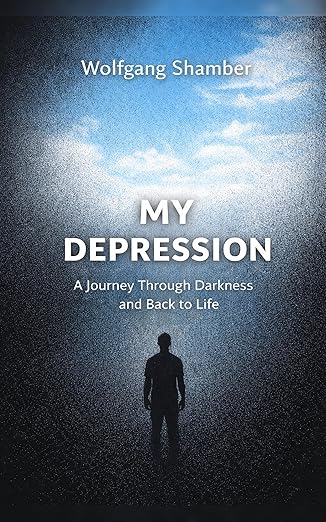
Quick Verdict
My Depression works best for readers who want a direct, personal, practical book rather than a polished academic overview. Its biggest strength is specificity. The author does not talk about depression in vague terms. He writes about real loops: Google checking, body monitoring, panic, derealization, sleep fear, catastrophic thoughts, and the exhausting cycle of trying to control everything. The main limitation is that this is not a detached clinical manual. It is a lived-experience recovery book, so readers looking for a purely professional textbook may want something more formal.
Key Facts at a Glance
- Author: Wolfgang Shamber
- Format reviewed: Amazon Kindle edition
- Main topics: depression, panic attacks, health anxiety, derealization, insomnia, behavioural activation, relapse prevention
- Book type: personal recovery / practical self-help
- Best for: readers who want lived experience plus clear self-work methods
What the Book Is About
The book starts before the breakdown. That matters. Instead of treating depression like something that came out of nowhere, it shows how years of tension, control, self-criticism, people-pleasing, and anxiety created the ground for what came later. From there, the author moves through health anxiety, panic attacks, derealization, insomnia, depression, and finally recovery work.
Several parts stand out right away: the health-anxiety loop built around Googling and checking, the way panic can feel like death even when it is not dangerous in itself, derealization as an overloaded-nervous-system state, and insomnia as a fear-driven cycle rather than just “bad sleep.” The later chapters shift into recovery tools, including CBT-I ideas, behavioural activation, energy tracking, pacing, and relapse prevention.
What the Book Does Well
The clearest strength is realism. This book understands how anxiety and depression actually feel from the inside. It does not flatten panic into “just calm down,” and it does not describe insomnia like a simple bedtime problem. It shows how fear, checking, hypercontrol, and catastrophic thinking keep the whole system going.
It is also unusually practical for a personal recovery book. The structure includes mini-practices and worksheets instead of only reflection. Readers get concrete tools such as a vulnerability map, a Google contract, a wave journal, a list of sleep-thought parasites, a 3P insomnia map, an energy journal, and a one-week behavioural activation plan.
Another strong point is topic overlap. Many readers do not have “just depression.” They have anxiety, panic, derealization, sleep problems, body fear, and loss of interest all at once. This book seems designed for that mixed reality rather than for one isolated label.
Where It Feels Weaker
The main weakness is that the book is personal by design. That is part of its value, but it also means some readers may want more outside research, more clinical framing, or more comparison with standard therapy models.
It is also quite direct. Readers who prefer softer, more literary mental health writing may find it more functional than elegant. But for the right reader, that will probably feel like a plus rather than a drawback.
Pros and Cons
✅ Pros
- Covers depression together with panic attacks, insomnia, health anxiety, and derealization
- Built on lived experience rather than vague theory
- Includes practical self-help exercises and worksheets
- Explains fear loops in simple, clear language
- Useful for readers who feel “stuck in the cycle” rather than just low in mood
❌ Cons
- Not a formal clinical manual
- Less research-heavy than some psychology books
- Very personal in angle and voice
- Readers wanting a broader expert overview may want a second book alongside it
Who Is It Best For?
✅ Buy it if:
- You want a depression recovery book based on real experience
- You are dealing with panic attacks, derealization, or health anxiety as well as depression
- You want a book about insomnia caused by fear, hyperarousal, and overcontrol
- You prefer practical self-work over motivational fluff
- You want to feel understood by someone who has actually gone through the same loops
❌ Skip it if:
- You want a purely academic psychology book
- You prefer therapist-led theory over personal narrative
- You are looking only for a short motivational read
- You want a narrow one-topic book instead of a mixed anxiety-insomnia-depression recovery story
Why This Book Stands Out in This Category
Many mental health books split problems into separate shelves: one book for panic attacks, one for insomnia, one for depression, one for health anxiety. My Depression is more honest about how these things often pile into each other. The health-anxiety loop feeds panic. Panic feeds derealization. Derealization and fear feed insomnia. Chronic insomnia and hyperarousal feed depression. The book appears to understand that chain very well.
That alone makes it relevant for readers searching terms like book about panic attacks and depression, insomnia and anxiety recovery book, health anxiety book, or derealization self-help book.
Writing Style and Readability
The writing style is direct, plain, and personal. It does not try to sound distant or overly polished. That works well here because the subject matter is intense and the reader is likely looking for clarity, not performance. The tone feels more like “this is what happened, this is what made it worse, this is what helped” than like a motivational speech.
For readers in a fragile state, that kind of writing may actually be easier to absorb than something more abstract or literary.
Is It Good for Panic Attacks, Insomnia, and Health Anxiety?
Yes, that is one of the strongest reasons to read it. This is not only a depression book. It clearly spends serious time on panic attacks, derealization, insomnia, body checking, health anxiety, and the fear loops that make symptoms louder. Readers who feel that their problem is a mix rather than a single diagnosis are likely to get more from it than from a more narrowly targeted book.
It is also worth being clear that the book presents personal experience and self-help support, not medical advice or emergency care.
Where to Buy
The Kindle edition is available on Amazon UK.
📘 View My Depression on Amazon UK ↗
Related mental health book reviews
If you want to compare this book with other mental health titles on Amazon UK, these reviews are good next steps.
- Why Has Nobody Told Me This Before? review — a more structured and practical mental health guide.
- Reasons to Stay Alive review — a memoir-style book about depression and recovery.
- Maybe You Should Talk to Someone review — a therapy-focused read with a more reflective tone.
Frequently Asked Questions
Is My Depression worth reading?
Yes, especially if you want a personal recovery book that covers depression together with panic attacks, health anxiety, derealization, and insomnia. It is less suitable for readers who only want a formal clinical textbook.
What is My Depression about?
It is a personal recovery book by Wolfgang Shamber about how long-term tension turned into panic attacks, physical symptoms, severe insomnia, and depression, and what helped him slowly recover.
Is this a self-help book or a memoir?
It is both. The book is based on lived experience, but it also includes practical self-help methods, exercises, and recovery tools.
Does the book talk about derealization and panic attacks?
Yes. Those topics are central to the book, alongside health anxiety, insomnia, and depression.
Is the book helpful for insomnia caused by anxiety?
Yes, especially because it discusses fear-driven insomnia, hyperarousal, the 3P model, sleep monitoring, catastrophic thoughts, and CBT-I-style recovery ideas in plain language.
Who should skip this book?
Readers who want only academic theory or a detached clinical overview may want something more formal. This book is strongest as a personal, practical recovery guide.
Some links on this page may be affiliate links. See our Affiliate Disclosure.