
How to Be Your Own Therapist Review UK — Is It Worth Reading?
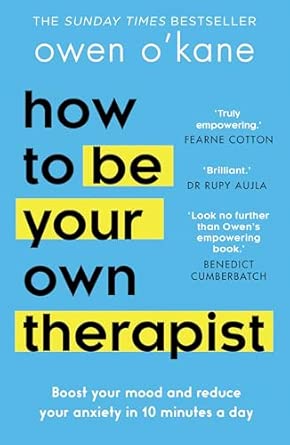
How to Be Your Own Therapist by Owen O’Kane is aimed at readers who want practical mental health tools without having to work through a dense psychology book. It promises short, realistic techniques for stress, anxious thinking, emotional overload, and everyday mental strain. This review looks at what the book does well, where it feels weaker, and the kind of reader it is most likely to help.
Quick Verdict
How to Be Your Own Therapist works best as a practical, easy-to-read mental health book for people who want simple tools they can use quickly. Its biggest strength is usability. Owen O’Kane keeps the advice short, direct, and grounded in everyday situations rather than turning the book into something abstract or overcomplicated. The main limitation is depth. Readers looking for a more research-heavy or clinically detailed book may find it lighter than they expected.
Key Facts at a Glance
- Author: Owen O’Kane
- Format reviewed: UK hardback edition
- Publisher: Harper Thorsons
- Publication date: 4 January 2024
- Length: 320 pages
- Main topics: stress, anxious thinking, emotional overload, mood dips, self-help techniques, practical mental health tools
What the Book Is About
The book is built around a clear idea: many readers do not need more theory, they need tools they can actually use in daily life. Owen O’Kane approaches the subject like a therapist who knows that readers are often already overwhelmed, so the structure stays practical and manageable.
Instead of presenting one big system, the book focuses on short interventions and realistic shifts in thinking and behaviour. That makes it more useful as a practical support book than a one-time read packed with abstract ideas.
What the Book Does Well
The strongest point is clarity. The advice is broken down into short, usable pieces, which makes the book feel far less intimidating than many heavier mental health titles. If you want something that gives you practical tools without sounding clinical or academic, this is one of the book’s biggest strengths.
It also works well for readers who want a therapist-style tone without feeling talked down to. The writing is direct, calm, and realistic, which helps the book feel approachable instead of preachy.
Another plus is pace. You do not have to read the book in one straight line to get value from it. Many readers will get the most from it by reading one section, trying one idea, and coming back later when another problem feels more relevant.
Where It Feels Weaker
The main weakness is that the same simplicity that makes the book accessible can also make it feel less substantial for some readers. If you already know a lot of entry-level self-help or therapy-based tools, parts of the book may feel more like reminders than breakthroughs.
It is also not the best fit for readers who want a more structured clinical framework, deeper research discussion, or one narrow topic explored in depth. Its strength is practicality, but that also sets a limit on how deep it goes.
Pros and Cons
✅ Pros
- Very readable and practical
- Short techniques that feel easy to apply
- Supportive therapist-style tone
- Good fit for busy or overwhelmed readers
- Works well as a book you can return to in small sections
❌ Cons
- May feel light for readers wanting more depth
- Some tools may feel familiar if you read a lot of self-help
- Not a specialist depression-only book
- More practical than research-heavy
Who Is It Best For?
✅ Buy it if:
- You want practical mental health tools without heavy jargon
- You prefer short, usable sections over theory-heavy chapters
- You feel stressed, emotionally overloaded, or mentally stretched
- You want therapist-style advice in an accessible format
- You like books you can dip into rather than read once and forget
❌ Skip it if:
- You want a research-heavy psychology book
- You are looking for a very narrow depression-focused title
- You already know a lot of basic therapy and self-help tools
- You prefer memoir-style mental health writing
Writing Style and Readability
This is one of the book’s clearest strengths. Owen O’Kane writes in a way that feels direct, practical, and calm, which makes the book easy to work through even if you are already stressed or mentally tired. It does not feel like a textbook, and that will matter to many readers.
The trade-off is that readers looking for more depth may find the tone and structure a little too light. Whether that feels like a weakness or a strength depends on what you want from the book.
Is It Good for Anxiety or Low Mood?
Yes, it can be helpful for readers dealing with stress, anxious thinking, emotional overload, or low mood, especially if they want a practical support book rather than a specialist clinical text. It is broader than a book about depression alone, which makes it useful for some readers and too general for others.
It is also worth being clear that a book like this should not be treated as a replacement for professional medical or mental health care.
Where to Buy in the UK
The UK hardback edition is available on Amazon UK. Depending on the listing and date, you may also see Kindle, paperback, or audiobook options.
📘 View How to Be Your Own Therapist on Amazon UK ↗
Related mental health book reviews
If you want to compare this practical mental health book with other titles on Amazon UK, these reviews are good next steps.
- Why Has Nobody Told Me This Before? review — a broader and more structured mental health guide with practical tools.
- The DOSE Effect review — a more habit-led mental health book built around a simple framework.
- High Functioning review — a practical book focused on hidden emotional struggle, burnout, and feeling low while still functioning outwardly.
For a broader overview, visit our Amazon UK mental health books page.
Frequently Asked Questions
Is How to Be Your Own Therapist worth reading?
Yes, especially if you want a practical and readable mental health book with short tools you can use in daily life. It is less suitable for readers wanting a more clinical or research-heavy approach.
What is How to Be Your Own Therapist about?
It is a practical self-help book by Owen O’Kane focused on stress, anxious thinking, mood dips, emotional overload, and realistic tools for everyday mental health support.
Is this book good for beginners?
Yes. That is one of its biggest strengths. The writing is clear, the techniques are short, and the book feels easy to follow even if you do not usually read psychology or self-help books.
Is it a depression book?
Not exactly. It is broader than that. It can still help with low mood, but it is more of a practical mental health toolkit than a narrow depression-only book.
Who should skip this book?
Readers who want a more technical, research-heavy, or clinically detailed mental health book may want something deeper and more specialised.
Some links on this page may be affiliate links. See our Affiliate Disclosure.